
Founder · Two Oaks Advisors
Lloyd Silver, CFA

The decision to sell a business you spent decades building is unlike anything you've faced before. There's no manual for it, and most owners are working through it alone.
I work with owners in exactly that moment — in the $1M to $10M range, where the stakes are real and the guidance often isn't — and who deserve someone who matches the seriousness of what they've built.
I'm an owner through and through. I've spent virtually my entire working life building, buying, and selling businesses. That shapes everything about how I advise — because the perspective of someone who has been in your seat is fundamentally different from someone who hasn't.
How I Got Here
The short version: everything I've done in my career led here. The long version is more interesting.
I started in investment advisory. Years of studying businesses — profit and loss statements, balance sheets, valuation models — first as a CFA candidate, then as a charterholder working with high-net-worth business owners on financial planning and analysis for both their businesses and them personally. During that time, I worked closely with owners who were preparing to sell. I saw firsthand what a well-handled exit could mean for someone's life. The proceeds from those sales were not just numbers. They were retirements funded, families taken care of, decades of effort converted into something lasting. That work stayed with me.
Then I became an owner myself. I ran a marketing agency for over a decade. I learned what it means to build something from nothing — the employees who depend on you, the customers who trust you, the years of decisions that compound into something real. I also learned the business from the inside: how to position a company, how to tell its story, how to make it visible to the right audience. That turned out to matter more in M&A than I expected.
When I started acquiring businesses, the experience confirmed something I had suspected. My second acquisition involved a broker, and it was a poor experience — one I heard echoed by many other owners and buyers I spoke with. The owner in that deal had spent years building something real, and the quality of guidance did not match the seriousness of the decision.
Around that time, I watched a jewelry store near one of my businesses close its doors. The shop had been there for over thirty years. The sign out front read "Everything Must Go, 50% Off." They were liquidating inventory at half price and walking away. The business itself — three decades of customers, reputation, location — had real value well beyond what was on the shelves. But nobody had told them that. Nobody had shown them what they were sitting on. That image stuck with me.
An owner who works for thirty years and walks away with a fraction of what they built, not because the value wasn't there, but because the right guidance wasn't. That's not acceptable.
Everything connected. The financial training. The marketing experience. The years working with owners approaching exits. The firsthand experience of buying and selling. The pattern of owners not getting the guidance these decisions demand. M&A advisory was the intersection of every skill I had built — and Two Oaks was the firm I wished had existed when I was on the other side of the process.
What I Bring to Every Engagement
The CFA Charter
The financial analysis behind every engagement I run is built on genuine rigor — because I hold the CFA charter, one of the most demanding credentials in finance. Fewer than one in ten people who begin the program earn it. In business brokerage, it is extraordinarily rare.
What that means in practice: I spent years learning and applying multiple methods of valuing companies, understanding the full depth of financial statements, and learning how to read between the lines of what the numbers are actually saying. That depth means I can find the real value in a business — including value an owner doesn't realize is there — and present it with the precision this decision deserves.
The valuation methodology, risk assessment, and financial positioning behind every engagement are built with that same rigor. CPAs, attorneys, financial advisors — they know what the CFA charter requires. It means the conversation starts at a different level.
Firsthand Buy and Sell Experience
I have personally bought businesses and personally sold one. Not as a broker facilitating someone else's deal — as the person making the decision.
The biggest lesson came from my own sale, a strategic acquisition by a larger company. The financial terms were fine. The other terms — what I was expected to do after the deal closed, how long I had to stay, what I could and couldn't control — were not what I would have negotiated if I had known then what I know now.
That experience is why I focus as hard on terms as I do on price for every client. Earnout structures, post-sale obligations, representations and warranties, timing of funds — these are the details that determine whether an owner is genuinely satisfied with the outcome or just satisfied with the number.
Hundreds of Closed Deals
I have been involved in hundreds of closed transactions on both the buy side and the sell side. That volume means I have seen what kills deals, what drives value, and what buyers actually care about. It also means I can spot a strong deal — or a weak one — quickly, which saves my clients time and protects them from pursuing paths that won't lead where they want to go.
What Else I Bring
Before M&A, I owned and ran a marketing agency for over ten years. That experience translates directly. Selling a business is, in part, a marketing exercise — positioning the company's story, presenting it to the right audience, making the value visible. Most advisors come from finance or operations. The marketing lens is something I bring that others in this space typically don't.
There's a question that rarely gets asked before a business goes to market: will the proceeds of this sale actually fund the life you want after? I can help answer it — because I spent years in investment advisory, working directly with business owners on financial planning and wealth transitions. I know what that answer looks like before a deal closes.
How I Work
I don't rush to market.
The industry incentive is speed — sign the listing, get to market, turn over inventory. That is how most deals work. I see it differently. If waiting and preparing means substantially more money and better terms for the owner, that is the right move. The goal is not to sell fast. It is to sell at the right price, on terms the owner will accept, to the right buyer.
Terms matter as much as price.
Most owners come in thinking about one number. I understand that — it's the first question everyone asks. I'm confident I'll get the number right. The terms — timing of funds, earnout conditions, post-sale obligations, representations and warranties — are what determine whether the outcome actually works for you.
I understand what drives value — and what puts it at risk.
Because I've spent years valuing companies and assessing risk, I can identify the specific factors that are holding your business's value back and translate that into changes you can make before going to market. I'm not coming in as an expert in your industry. You know your business better than I ever will. What I bring is the ability to see clearly what drives your business's value and help you make the adjustments that meaningfully improve it.
This is a working relationship built on trust.
I choose to work with people I respect and get along with. This is not a short engagement — we will likely work closely together through a process that takes whatever time it requires. I need that relationship to be built on honest communication in both directions. I welcome pushback. I welcome hard questions. What I require is honesty. If something isn't true, I'll find out eventually, and so will a buyer. If you're open with me from the start, I can position everything to put your business in the strongest possible light.
I have your best interests in mind. We both want the same thing — the right price, the right terms, and an outcome you can stand behind. Sometimes that number won't be what you hoped, and I'll be the one to have that conversation. I promise that the advice I give is the advice I believe will lead to the best outcome. You can push back. You can verify. But at the core of this, you need to trust that I'm in your corner.
The Credentials Behind the Work
- CFAChartered Financial Analyst
- One of the most demanding credentials in finance. Fewer than one in ten candidates earn it. Extraordinarily rare in business brokerage.
- CBICertified Business Intermediary
- IBBA’s highest mark of distinction — reserved for the profession’s most accomplished brokers. It’s the credential IBBA itself tells clients to look for when the stakes are high.
- CBBCertified Business Broker
- California’s most selective business-brokerage credential — held by fewer than 100 brokers statewide. CABB reserves it for those who’ve built a career at the top of the profession.
- DRE LicensedCalifornia Department of Real Estate
- Lloyd Silver: DRE #02185607. BTI Group: DRE #01160661.
CFA and Chartered Financial Analyst are registered trademarks owned by CFA Institute.
Outside the Office
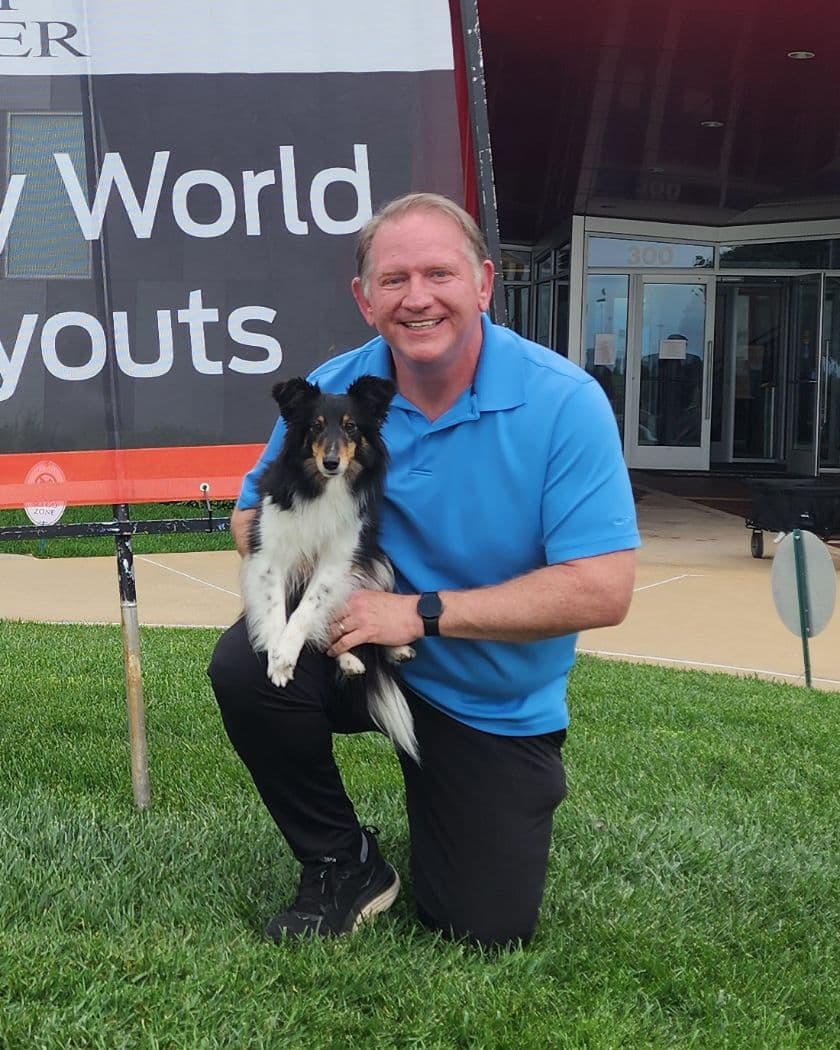
When I'm not working on deals, I'm usually at a dog agility trial.
I'm married to Jessica — we met doing agility, and it's still what we spend most weekends doing. We have four dogs: Vespa, a Sheltie I run in competition, Nali and Harpy, two Vizslas my wife runs, and our newest addition, Bindi — a Sheltie puppy I'm training for her first agility runs. It's a great outlet to compete, stay in shape, and remember that not everything has to be about business.
Other than agility, I read a ton — mostly political and espionage thrillers with the occasional business book when I find something new and interesting. And I spend a lot of time building with AI — not just work-related tools, but tools that help me lead the most productive and fulfilling life possible, including my own personal operating system that helps me stay on top of everything and continue to make progress in the most important areas of my life.

Let's Start with a Conversation
No commitment. No pressure. Just clarity.
It starts with what you want — your situation today, the outcome you're after, and what it would take to get there. Whether you're ready to move forward or just weighing your options, you'll come away with a clearer sense of where you stand. A confidential conversation with Lloyd. Everything we discuss stays between us.